
Quality has always been a promise. Today, it is a measurable competitive advantage. Production processes are becoming more complex, cycle times shorter, variants more numerous, and traditional testing mechanisms are increasingly reaching their limits when it comes to this very complexity. This is exactly where AI quality control comes in.
Not as a substitute for experience, but as an intelligent amplifier. It recognizes patterns before they become visible, detects deviations before rejects occur, and makes quality predictable instead of reactive.
Companies that only check quality today are acting too late. Companies that manage quality with AI gain time, security, and trust. In this article, we show how quality control with AI can be successful.
The most important information in brief
- AI quality control analyzes data, images, and processes in real time and detects errors before they become critical.
- It complements human expertise with consistent, scalable precision.
- AI is particularly strong where high volumes, complex features, and low error tolerances come together.
- When properly integrated, AI quality control transforms from a control point into a strategic management tool.
- The greatest added value comes from customized models rather than standard solutions.
Areas of application for AI in quality control
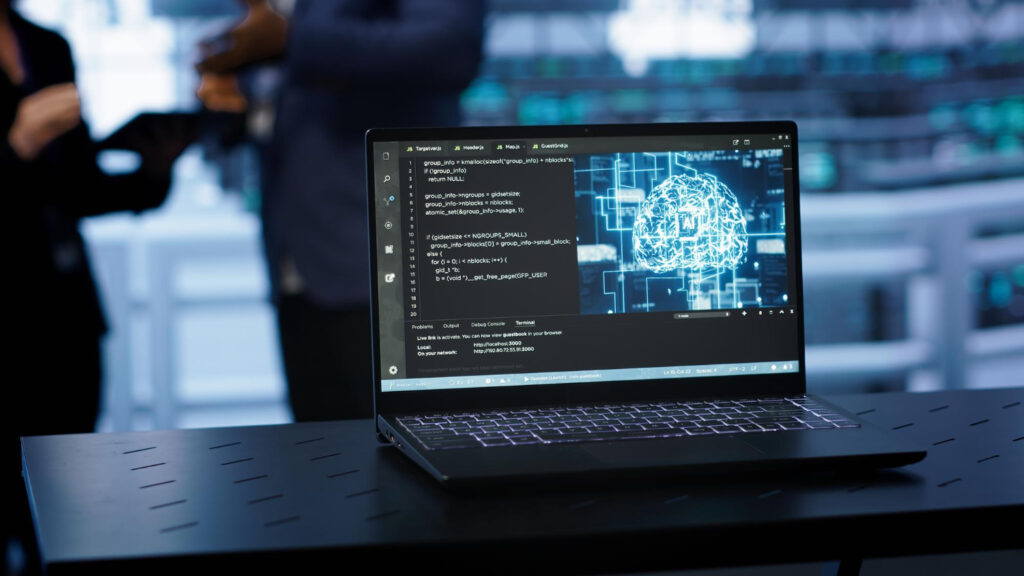
AI tools show their strength wherever traditional testing methods reach their limits in terms of speed, volume, or complexity. The decisive factor is not the industry, but the question: Where do errors occur? Where do the causes remain hidden? And where is quality still controlled rather than managed today? This is exactly where AI quality control comes in.
Visual inspection and surface testing
Camera systems combined with AI detect the smallest deviations: scratches, discoloration, shape defects, or irregular structures that would escape the human eye or only become apparent upon closer inspection. AI quality control not only analyzes individual images, but also continuously learns what is "good" and what is "deviating." And it does so even with varying materials, lighting conditions, or production speeds.
One key advantage is consistency: while human inspectors tire or evaluate differently, AI remains objective and reproducible. This ensures consistent quality and significantly less wastage, especially in series production or with high volumes.
At the same time, test criteria can be flexibly adjusted without having to restart the entire process.
Real-time process monitoring
Quality is not created at the end of the production line, but in every single step of the process. AI continuously analyzes sensor data, machine parameters, temperature curves, and vibrations, and detects deviations before they manifest themselves as measurable errors. AI quality control thus transforms from a purely reactive function to a proactive control element.
The ability to reveal connections is particularly valuable: small changes that appear insignificant in isolation can cause quality problems when combined. AI recognizes precisely these patterns and provides early indications of where adjustments need to be made. This reduces downtime, prevents waste, and stabilizes processes in the long term.
Dimensional, tolerance, and geometric inspection
In manufacturing environments with tight tolerances, random sampling is often insufficient. AI continuously compares target and actual values across large amounts of data. In doing so, it not only detects clear limit violations, but also gradual changes that indicate tool wear, material fluctuations, or process drift.
AI quality control acts as an early warning system here: deviations become apparent not only when parts are outside the tolerance range, but already in the phase before that. This enables targeted interventions before quality losses or complaints arise, shifting quality management from repair to prevention.
Documentation and verification requirements
Quality must not only be right, but also verifiable. AI automates the creation of test reports, structures data from different sources, and ensures complete documentation. This significantly reduces manual effort and minimizes errors in tracking.
At the same time, transparency is created: audit decisions become traceable, deviations can be tracked, and audits can be prepared efficiently. AI quality control thus supports not only operational processes, but also compliance, certifications, and external audits. And all this without additional bureaucratic ballast.
Advantages of quality control with AI
The true benefit of AI quality control lies not only in error detection. It lies in transforming quality from a pure testing process into an active control instrument. With the right AI solutions, companies gain transparency, confidence in their actions, and a new form of control.
Greater precision and objective decisions
AI evaluates every product, every process step, and every deviation according to the same criteria. Without daily fluctuations, without room for interpretation, without fatigue. This ensures significantly greater objectivity in the evaluation—especially in borderline cases that are difficult to classify manually.
AI quality control does not make decisions based on individual observations, but rather on thousands of comparative values. This continuously increases precision.
Speed without compromising quality
Traditional quality control often involves a trade-off between speed and accuracy. AI resolves this conflict. Inspections run parallel to production, in real time and without slowing down throughput.
The added value is particularly evident at high cycle rates: AI quality control detects deviations immediately and enables immediate intervention. This significantly reduces downtime, recalls, and costly re-inspections.
Sustainable cost reduction through less waste
Errors that are detected early cost little. Errors that are detected late cost a lot. AI systematically shifts this point in time forward. Early pattern recognition allows causes to be identified before they lead to rejects, rework, or complaints.
The effect goes beyond short-term savings: processes become more stable, material usage more efficient, and resources are used in a more targeted manner. AI quality control thus not only reduces costs, but also has a lasting effect.
Scalability for growing requirements
Production volumes are rising, variants are increasing, and supply chains are becoming more complex. AI scales with these requirements. Once trained, a model can be adapted, expanded, and transferred to new scenarios without a proportional increase in testing effort.
AI quality control offers a clear advantage, especially for companies with multiple locations or changing product lines: quality remains comparable, regardless of location, shift, or batch size.
Quality as a learning system
An often underestimated advantage: AI never forgets. Insights gained from past mistakes, deviations, or optimizations remain stored in the system and are incorporated into future decisions. Quality thus continues to improve on an ongoing basis.
AI quality control becomes the digital memory of the organization. The experience and knowledge of individual employees becomes available in a structured way, processes become more traceable, and decisions become more transparent. This not only strengthens quality itself, but also confidence in it.
AI quality control ensures effective quality management
AI quality control is no longer a promise for the future, but already a real lever for better processes, more stable quality, and more informed decisions. It reveals what was previously hidden, recognizes connections instead of individual problems, and shifts quality management from reacting to designing.
But this is precisely where the challenge lies: added value does not arise automatically from the use of AI. Without a clear target vision, clean data, and well-thought-out integration, AI remains an isolated tool: powerful, but ineffective. Only when AI quality control is strategically embedded in processes, systems, and responsibilities does it unfold its full potential.
This is precisely where we come in. With a clear eye for feasibility, structure, and benefits, BE BRAVE accompanies companies from the initial question to sustainable implementation. Not merely technology-driven, but practical. Not as an experiment, but as a long-term solution. In this way, AI quality control becomes not an end in itself, but a reliable component of modern quality assurance.
Frequently Asked Questions
AI quality control uses learning algorithms to automatically analyze quality characteristics, detect deviations, and continuously monitor processes—often in real time.
Wherever quality can be measured: industry, manufacturing, logistics, medical technology, food production, or even high-tech areas with tight tolerances.
No. AI complements human expertise. It takes on data-intensive, repetitive tasks and provides a basis for decision-making. Responsibility and evaluation remain with humans.
The effort involved depends on the goal, the data available, and the existing infrastructure. With a clear strategy, AI can be integrated step by step without jeopardizing ongoing processes.
Data is the foundation of all AI. What matters is not so much the quantity as the quality, structure, and relevance of the data for the specific application.